
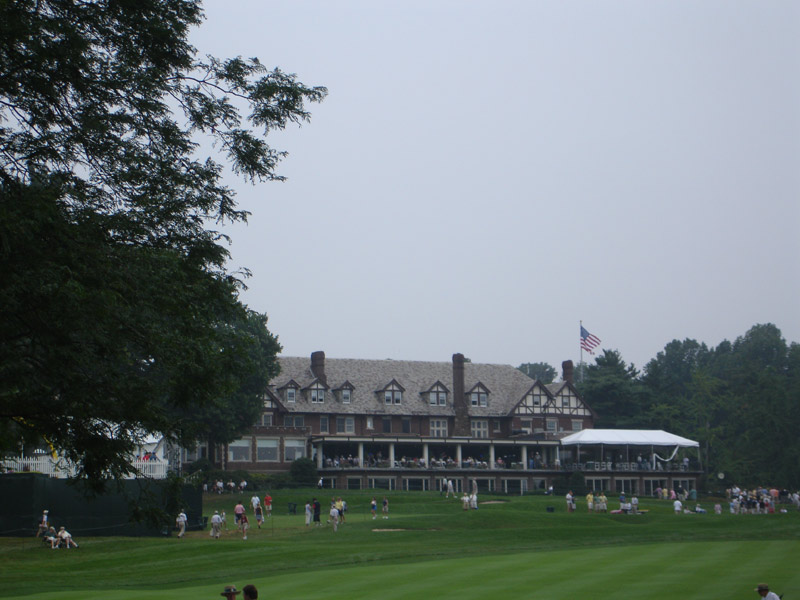
When the 2026 PGA Championship tees off at Aronimink Golf Club on May 14, it will mark the return of major championship golf to one of Pennsylvania’s most storied private clubs. Nestled in Newtown Square, just west of Philadelphia, Aronimink has waited 64 years since its last PGA Championship. The course is ready, and the world’s best golfers are about to find out why this Donald Ross masterpiece has never lost its reputation for demanding precision, patience, and nerve.
A Historic Setting: Aronimink Golf Club in Newtown Square
Aronimink Golf Club was established in 1896, originally located in Ardmore before relocating to its current home in Newtown Square, Delaware County, Pennsylvania. The club commissioned the legendary Scottish-born architect Donald Ross to design a new course on a 300-acre property along St. Davids Road, and on Memorial Day 1928, Aronimink Golf Club opened for play.
Ross was at the height of his powers when he created Aronimink. He had already produced acclaimed layouts at Pinehurst No. 2, Oakland Hills, and Seminole, and the Aronimink design reflected all of his hallmarks: natural contours used to dictate play, fairways that reward positional thinking, and those famous raised, crowned greens with subtle slopes that make putting a constant challenge even after a perfect approach.
In 2003, golf architect Ron Prichard, the foremost authority on Ross’s design philosophy, completed a meticulous restoration at Aronimink. The project recaptured classic Ross features that had been softened or lost over decades, returning the course to something as close to its original intent as possible. The greens, fairways, and hazard placements that exist today are faithful to what Ross conceived almost a century ago.
Course Layout: Par 70 with Championship Teeth
Aronimink plays to a par of 70 at approximately 7,267 yards from the championship tees. That par-70 format is an important detail. At most modern major venues, competitors play to par 70 or 71 with four par-5s providing birdie opportunities to balance the card. Aronimink’s design keeps things tight. The layout features only two par-5s and four par-3s, placing enormous pressure on par-4 play throughout the round.
The course is defined by 75 bunkers strategically placed to punish missed fairways and errant approaches. The rolling topography of Delaware County’s hillside terrain creates elevation changes throughout the round, with fairways that dog-leg through corridors of mature trees and greens that sit at angles designed to make club selection critical. There are no truly flat lies at Aronimink, and the undulating putting surfaces mean even a good approach shot can leave a tricky lag putt.
Holes of particular note include the demanding par-4 18th, which closes the round with a test that has historically separated contenders from pretenders. The par-3 holes at Aronimink are among the most talked-about on the property, requiring precise iron play to specific sections of greens where pins will be tucked in the most difficult positions during championship week.
Why Aronimink Is Built for Major Championship Golf
Not every great golf course makes a great major venue. The best championship layouts must reward excellence while exposing weakness, and Aronimink does both. The course’s par-70 format punishes any player expecting to grind out pars and collect birdies on the par-5s. Scoring opportunities are limited, which means the field will be compressed and small mistakes will be costly.
The Ross greens are particularly challenging in a major setting. Championship rough will frame fairways already tightened by tree lines, and when USGA and PGA of America setup conditions are applied, the already-firm, fast greens become treacherous. Players who excel with their irons and show accuracy off the tee will have a significant advantage over longer hitters who lack control.
The course’s location near Philadelphia also introduces weather as a factor. Late-May conditions can bring wind off the surrounding hills, testing club selection on every approach. In past major championships held in the Mid-Atlantic region, wind has often been as significant a challenge as the course setup itself.
For a detailed look at who the oddsmakers and analysts favor at Aronimink, see our full 2026 PGA Championship preview with key player breakdowns and course-fit analysis.
The 1962 PGA Championship: Gary Player’s Aronimink Triumph
The last time the PGA Championship visited Aronimink was July 19-22, 1962. South Africa’s Gary Player claimed the Wanamaker Trophy with a total score of 278, two under par, edging runner-up Bob Goalby by a single stroke.
Player’s 1962 win was part of one of golf’s great careers. He would go on to complete the career Grand Slam and win nine major championships in total, but the 1962 PGA was a landmark moment, demonstrating that the South African star could compete and win on demanding American courses in high-pressure conditions.
The low winning score of 278 across four rounds reflects just how much Aronimink tests the field. Even with equipment and agronomic advances since 1962, the course’s fundamental challenges remain. Expect the 2026 winner to post a similarly disciplined total rather than a runaway scoring performance.
Aronimink’s Championship Pedigree Beyond the PGA
The 1962 PGA Championship is far from the only major event Aronimink has hosted. The club has built a reputation as a reliable and demanding championship venue across multiple generations of professional golf.
Aronimink hosted the 2003 Senior PGA Championship, putting the Ross layout in front of a Champions Tour field that included many former PGA Tour winners familiar with demanding historic courses. In 2020, the club stepped up again to host the Women’s PGA Championship, providing one of the most prestigious stages in women’s professional golf. The club’s willingness to prepare the course to major championship standards for different tours speaks to the quality of both the facility and the membership.
The 2026 PGA Championship: What to Expect at Aronimink
The 108th PGA Championship runs from May 11 to 17, 2026, with the four competitive rounds played May 14-17. Organizers are expecting more than 200,000 spectators over the course of the week, making it one of the largest attended sporting events in Pennsylvania history.
Course preparation for a modern PGA Championship requires significant work. Rough will be grown to penalize missed fairways, greens will be firmed and quickened to championship speed, and grandstands will be positioned to give spectators sight lines across the most dramatic holes. The 18th hole typically becomes an amphitheater setting for the final day’s drama.
The 2026 PGA Championship is particularly anticipated given the storylines heading into Aronimink. Rory McIlroy arrives as the back-to-back Masters champion, chasing a calendar Grand Slam after his historic Augusta victories. Scottie Scheffler, the reigning PGA Champion, will look to defend his title on a course that could suit his ball-striking precision. For a full prize money breakdown, see our guide to the 2026 PGA Championship prize money and purse.
McIlroy’s pursuit of the complete set of majors adds a storyline that captures fans worldwide. His career at the PGA Championship and across the major landscape has been one of the defining narratives in golf over the past decade. Our deep dive into Rory McIlroy’s major record and Grand Slam chase covers the full context of what Aronimink could mean for his legacy.
Scheffler, meanwhile, enters the week as the undisputed world number one. His combination of driving accuracy and world-class iron play makes Aronimink a course that should suit him well. A par-70 layout that rewards precision over power is exactly the type of test where the world’s best ball-striker can separate himself from the field. Our profile of Scottie Scheffler: World No. 1 and the best golfer on the planet details why he arrives as the player to beat.
Aronimink Compared to Recent Major Venues
Context helps. How does Aronimink stack up against other recent PGA Championship venues?
Valhalla Golf Club in Louisville, which hosted the 2024 PGA Championship, is a more generous layout where length offers an advantage. Quail Hollow Club in Charlotte, another recent major host and home of the Wells Fargo Championship, rewards bombers willing to attack a longer, wider layout. Aronimink is different in character: it is tighter, shorter in raw yardage but harder to score on, and its par-70 format removes the scoring cushion that par-5s provide at venues like Valhalla. Our Quail Hollow course guide offers a useful comparison for fans wanting to understand how classic American championship designs differ.
Aronimink’s closest comparison among recent venues may be Bethpage Black and the older-style courses in the Northeast corridor, where classic design, tree-lined fairways, and demanding greens make scoring a fight from the first hole to the last. The course does not demand a specific style of play as much as it demands that every aspect of the game be in order simultaneously.
Final Verdict: An Ideal Test for the World’s Best
Aronimink Golf Club’s return to the major championship calendar after 64 years is more than a sentimental occasion. This is a course built to test the finest golfers on earth, and the 2026 PGA Championship will confirm what generations of members and champions have always known: there are very few places in world golf where the challenge is as complete, as fair, and as unrelenting as it is on Donald Ross’s rolling masterpiece in Newtown Square, Pennsylvania.
The Wanamaker Trophy will be earned the hard way at Aronimink. It always has been.