
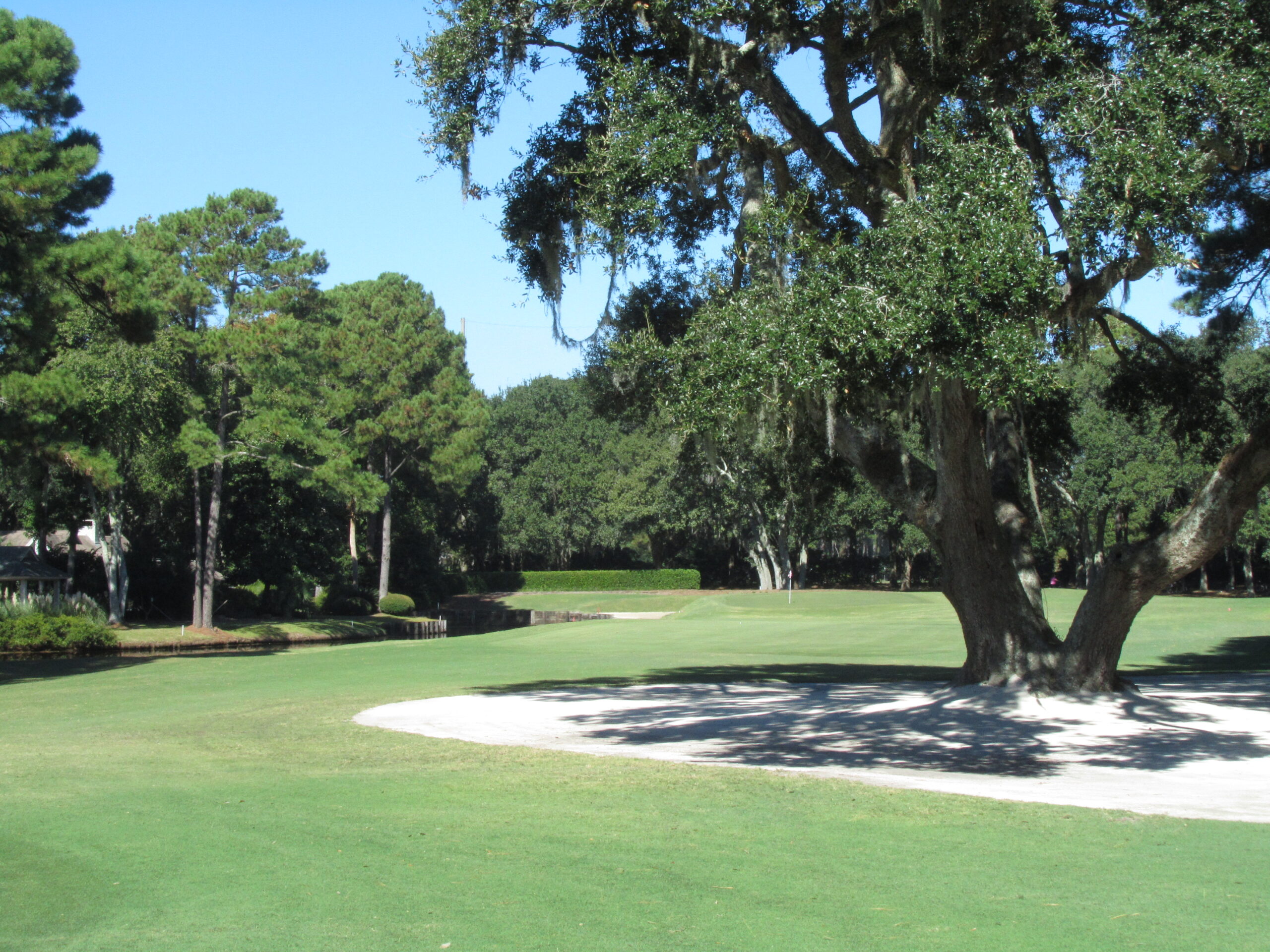
Harbour Town Golf Links is one of the most distinctive and beloved venues in American professional golf. Nestled among the salt marshes and maritime forest of Hilton Head Island, South Carolina, this Pete Dye and Jack Nicklaus design has hosted the RBC Heritage since 1969. It is a course that demands thought, precision, and control above all else, offering a refreshing alternative to the power-dominated courses that dominate the modern professional game.
Harbour Town Golf Links: Overview
Situated on the southern end of Hilton Head Island, Harbour Town Golf Links is part of the Sea Pines Resort complex. The course sits adjacent to Calibogue Sound, with the Atlantic Ocean close by and the famous striped lighthouse that marks the 18th hole visible from much of the back nine. The combination of natural beauty and demanding golf makes Harbour Town one of the most atmospheric venues in all of professional golf.
The course plays as a par 71 at 7,099 yards from the tournament tees. It is not long by modern standards, and that is precisely the point. Harbour Town was designed at a time when architects were beginning to challenge the prevailing wisdom that longer automatically meant harder. Pete Dye and Jack Nicklaus created a layout where accuracy off the tee, intelligent club selection, and precise approach play are rewarded while brute strength is largely neutralised.
Course History: Dye, Nicklaus and the 1969 Vision
Harbour Town Golf Links opened in 1969, the product of a collaboration between Pete Dye and a young Jack Nicklaus, who was just 29 years old at the time and still establishing his reputation as the dominant force in professional golf. The design partnership would prove to be one of the most consequential in the history of golf course architecture.
Dye brought his characteristic design philosophy: small greens, tight fairways, waste areas, and a premium on strategic decision-making. Nicklaus contributed a player’s perspective, helping to ensure the course challenged professionals without sacrificing playability for recreational golfers. The result was a layout that broke the mould of the era, featuring railroad ties as bunker faces, the use of natural water features, and greens that are among the smallest on the PGA Tour.
The course hosted the Heritage Classic from 1969, with Arnold Palmer winning the inaugural edition and defeating the rest of the field including the co-designer Nicklaus. That first tournament set a tone that has continued for more than five decades: Harbour Town rewards craft, not just raw power.
Over the years, Dye made a number of adjustments to the original design, tightening fairways and refining green complexes to keep pace with advances in equipment and athleticism. The course underwent a significant restoration and renovation project in 2012 to address drainage issues and refresh the playing surfaces. The work was sensitive to the original design, preserving the character that has made Harbour Town so distinctive.
Signature Holes: The 17th and the Iconic 18th
Two holes at Harbour Town are known to every serious golf fan, and they form the most dramatic finishing stretch on the PGA Tour schedule.
The par-3 17th hole is one of the finest short holes in the world. Playing between 140 and 185 yards from the tournament tees, it asks players to fire an iron shot over a lagoon to a green that is both small and heavily defended by water on three sides. There is almost no miss that does not result in punishment, and with the tournament often on the line at this point in Sunday’s final round, the 17th has produced some of golf’s most memorable moments of both heroism and despair.
The 18th is arguably the most photographed closing hole in American golf. A slight dogleg left plays along the edge of Calibogue Sound, with the striped Harbour Town Lighthouse standing sentinel behind the green. The tee shot requires a precise carry over a large waste area, and the approach to a green surrounded by water and backed by the lighthouse demands nerve and execution. It is a finishing hole that sends players and spectators alike home with an image they will not forget quickly.
Course Statistics and Playing Characteristics
- Par: 71
- Tournament yardage: 7,099 yards
- Greens: Bermuda (overseeded with bentgrass for winter/spring play)
- Fairways: Bermuda
- Average green size: Among the smallest on the PGA Tour
- Course record: 60 (PGA Tour history)
The course is characterised by tight, tree-lined fairways that channel tee shots into narrow landing zones. Spanish moss hangs from towering live oak trees, and dense vegetation lines many holes. The fairways, while not exceptionally long, require players to position their drives precisely to allow clear sightlines and appropriate angles into the greens.
Wind is a persistent factor at Harbour Town. The coastal location means that southerly and south-westerly breezes off the sound and ocean can significantly alter club selection and shot shape requirements. Competitors who can control their ball flight and adjust to changing conditions have a distinct advantage over those who rely on a single trajectory in all conditions.
How to Play and Visit Harbour Town Golf Links
Harbour Town Golf Links is open for public play as part of the Sea Pines Resort. Green fees vary by season and time of day, with rates typically ranging from around $200 to $350 for resort guests and slightly higher for non-resort visitors. The most affordable times are typically early mornings and the shoulder season outside of peak spring and summer periods.
Sea Pines Resort offers comprehensive accommodation options, from vacation villas to luxury hotel rooms, allowing visitors to combine golf with an extended island stay. Hilton Head Island itself is renowned for its natural beauty, cycling trails, and beach facilities, making it an attractive destination beyond the golf.
For those seeking the full professional experience, attending the RBC Heritage in person is highly recommended. The tournament’s relatively intimate atmosphere, with spectator access close to the action and the spectacular lighthouse backdrop on 18, makes it one of the most enjoyable events to attend in person anywhere on the PGA Tour calendar.
RBC Heritage 2026: Why Precision Beats Power at Harbour Town
The RBC Heritage 2026 takes place the week after the Masters, and Harbour Town’s demanding, precision-focused layout produces a very different winner profile compared to Augusta National.
History shows that Harbour Town rewards ball-strikers who can shape the ball both ways, control their distances into small greens, and hole crucial putts on surfaces that are tricky but not unfair. Players who rank highly in strokes gained: approach the green and around the green tend to be the ones lifting the plaid jacket at week’s end.
The course does not favour the longest hitters on tour in the same way that US Open venues or championship links courses might. A player driving the ball 280 yards but hitting it accurately can absolutely compete with a 320-yard bomber who cannot hit the fairways. This democratisation of competition is one of the reasons Harbour Town continues to be so well-loved by players and fans alike.
After the drama of the Masters 2026 at Augusta National, Harbour Town offers a completely different but equally compelling test. The intimate setting, the lighthouse, and the ever-present coastal breeze make the RBC Heritage one of the most atmospheric events of the entire PGA Tour season.
Pro Tips: How to Score Well at Harbour Town
For recreational golfers fortunate enough to play Harbour Town Golf Links, a few principles can help keep the scorecard respectable.
First, accept the small greens and plan your approach shots accordingly. Rather than firing at pins, which are often positioned in tight corners, aim for the fat part of the green and give yourself a reasonable two-putt chance. Aggressive pin-hunting at Harbour Town is the fastest route to a double bogey.
Second, respect the wind. Always check the direction before selecting your club, because what appears to be a straightforward iron shot can become a disaster if you underestimate how coastal winds affect the ball. Keeping the ball below the wind when possible is sound strategy throughout the round.
Third, the par-3 17th over the lagoon demands a clear head. Take enough club to comfortably reach the middle of the green and do not be seduced by a flag cut tight to the water. The penalty for going short or right is severe. Take your par and move on to the famous 18th.
Finally, take time to savour the 18th hole. The combination of the sound, the lighthouse, and the pressure of the closing tee shot makes it a genuinely special experience. Whether you make par or take a bogey, finishing at Harbour Town Golf Links is a memory you will carry for a long time.