
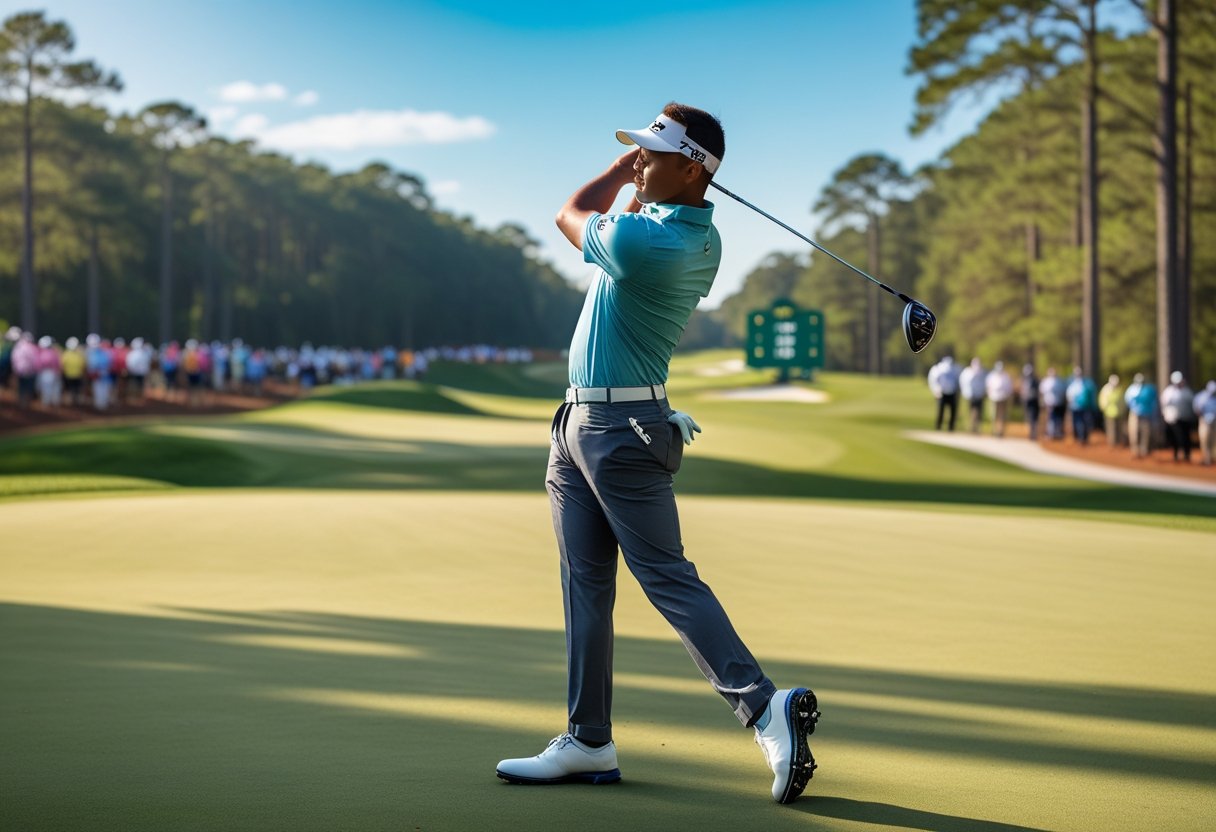
Rory McIlroy is considered one of golf’s top talents, with multiple major championships to his name. However, the career grand slam-winning all four major tournaments-remains an elusive goal for him. He has won three of the four majors: the U.S. Open, The Open Championship, and the PGA Championship, but has not yet claimed the Masters Tournament title.
This gap defines McIlroy’s quest in golf history, as very few players achieve the career grand slam. His achievements so far reflect a high level of consistency and skill, making his pursuit of the Masters a compelling storyline in the sport.
Fans and analysts watch closely to see if McIlroy can complete this prestigious accomplishment before the peak of his career passes. His journey highlights both the difficulty of winning a career grand slam and the talent required to come close.
What Is the Career Grand Slam in Golf?
The career grand slam in golf refers to winning all four major championships at least once during a player’s career. This rare achievement highlights a golfer’s versatility and ability to conquer diverse playing conditions and course challenges.
Definition and History
The career grand slam consists of winning the Masters Tournament, the PGA Championship, the U.S. Open, and The Open Championship. These four majors each have unique challenges, such as different course layouts, weather, and pressures. The term “grand slam” was originally used to describe winning all four majors in a single calendar year, a feat only Bobby Jones has accomplished in 1930.
Over time, the meaning shifted to refer to winning all four majors during a player’s career. This adaptation acknowledges the difficulty of winning each at least once, even across many years. The career grand slam remains one of golf’s highest honors.
Criteria for Achievement
To complete the career grand slam, a golfer must win each of the four majors a minimum of one time. The order in which the majors are won does not matter. The player must achieve these wins over their entire playing career, not necessarily within a short time span.
The achievement demonstrates consistent excellence on various course types and conditions, from Augusta National’s manicured greens to links-style challenges in The Open. It requires peak performance against the strongest fields in professional golf. Multiple wins of a single major do not count as additional steps toward the grand slam.
List of Other Career Grand Slam Winners
As of 2026, only five male golfers have completed the career grand slam:
| Player | Era | Notes |
|---|---|---|
| Gene Sarazen | 1920s-1930s | First to complete the career slam |
| Ben Hogan | 1940s-1950s | Known for precision and strategy |
| Gary Player | 1960s-1970s | First non-American to achieve it |
| Jack Nicklaus | 1960s-1980s | Record six Masters wins |
| Tiger Woods | 1990s-2010s | Youngest to complete it |
Each dedicated different parts of their careers to achieving the milestone, reflecting adaptability and sustained performance at the highest level.
Rory McIlroy’s Major Championship Victories
Rory McIlroy has claimed four major championships, each marked by dominant performances and significant milestones. His victories span from his breakthrough at the U.S. Open to his commanding wins at the PGA Championship and The Open Championship, showcasing his consistent skill against top competition.
Overview of Majors Won
McIlroy’s major wins are distributed over three different tournaments, underscoring his versatility. By 2014, he had secured two PGA Championships, one U.S. Open, and one Open Championship.
| Year | Major Tournament | Score vs Par | Venue |
|---|---|---|---|
| 2011 | U.S. Open | -16 | Congressional CC |
| 2012 | PGA Championship | -13 | Kiawah Island |
| 2014 | Open Championship | -17 | Royal Liverpool |
| 2014 | PGA Championship | -16 | Valhalla GC |
Each victory was characterized by substantial margins, reflecting his control and composure under pressure.
2011 U.S. Open
McIlroy’s first major win came at the 2011 U.S. Open held at Congressional Country Club. He finished at 16-under par, setting a new scoring record for the event. This win marked his arrival on the global stage.
He led by a wide margin, ultimately winning by eight strokes, one of the largest in U.S. Open history. The victory demonstrated not only his technical skill but also his mental toughness in a challenging major setup.
2012 PGA Championship
The 2012 PGA Championship at Kiawah Island represented McIlroy’s second major title. He finished at 13-under par, securing victory by a record eight strokes.
Despite a bogey-free final round, his steady play kept him far ahead of the field. This win emphasized his capacity to dominate not just once, but consistently at golf’s highest level.
2014 Open Championship
At the 2014 Open Championship at Royal Liverpool, McIlroy delivered a commanding performance. He shot 17-under par, winning by two strokes.
His consistent ball-striking and putting were key in overcoming strong challengers. This win contributed significantly toward his career grand slam aspirations.
2014 PGA Championship
Later in 2014, McIlroy captured his second PGA Championship at Valhalla Golf Club. Posting a 16-under par total, he won by one stroke.
The final round showcased his calm under pressure, particularly on the back nine. This victory solidified his status as one of the premier major champions of his generation.
The Masters: The Elusive Major for Rory McIlroy
Rory McIlroy’s quest to complete the career Grand Slam hinges on his performance at The Masters, the only major title missing from his resume. His efforts at Augusta National reveal moments of brilliance as well as significant hurdles. Understanding these factors sheds light on why The Masters remains a focal point in his pursuit.
Why The Masters Is Key to the Grand Slam
The Masters is one of golf’s four major championships alongside the U.S. Open, The Open Championship, and the PGA Championship. McIlroy has won the other three majors multiple times but has yet to claim a green jacket.
Completing the career Grand Slam means winning all four majors at least once. Winning The Masters is essential because it tests skills unique to Augusta National-undulating greens, strategic shot-making, and course management under pressure. His missing Masters title stands as the final piece to elevate his legacy among the sport’s elite.
Rory McIlroy’s Best Performances at The Masters
McIlroy’s highest finish at The Masters is tied for third place, achieved in 2015 and again in 2022. In 2015, he completed all four rounds under par, showcasing his ability on demanding Augusta terrain. His 2016 tournament was notable, as he started strong but faded in the weekend rounds to finish tied for 17th.
In 2022, he demonstrated renewed consistency, contending on Sunday but ultimately falling short of the lead. His performance highlights his potential, though closing out the tournament has been elusive at Augusta. These performances reflect both his capability and the challenges he faces to secure a win.
Major Setbacks and Close Calls
McIlroy encountered several setbacks at The Masters, most notably in 2011 when he was in contention but made crucial errors on the back nine. In 2013, he suffered a wrist injury that affected his play early in the season, including Augusta.
Another close call came in 2018 during a playoff against Patrick Reed. McIlroy’s missed birdie putt on the 18th hole in regulation was a pivotal moment, as he finished runner-up. These moments demonstrate how narrow the margin has been between victory and defeat in his Masters campaigns.
Historical Context of The Masters Challenge
Historically, The Masters is a tournament where nerves and experience often dictate success. Many great players have struggled to win there despite dominance elsewhere. It took legends like Jack Nicklaus several attempts to finally capture the green jacket.
For McIlroy, the pressure of completing the Grand Slam adds significant weight. The course history exemplifies the difficulty players face adapting to Augusta’s unique demands. His journey at The Masters parallels those of other greats who have battled repeatedly to conquer the course.
Rory McIlroy’s Pursuit of the Career Grand Slam
Rory McIlroy’s career has been marked by the quest to win all four major golf championships. His achievements, setbacks, and the pressure surrounding this rare feat have shaped his journey.
Timeline of Attempts at Completing the Slam
McIlroy secured his first major at the 2011 U.S. Open, quickly followed by victories at The Open Championship (2014) and the PGA Championship (2012, 2014). The Masters has remained elusive despite multiple close calls.
He finished T2 at the Masters in 2011 and 2015, and 4th in 2012. Each attempt drew significant attention as he sought the final piece to complete the Slam.
In 2019 and 2021, McIlroy’s Masters performances reflected ongoing challenges, with rounds affected by inconsistency and pressure. His persistence at Augusta National remains a central storyline.
Notable Moments and Turning Points
Winning the 2011 U.S. Open by eight strokes established McIlroy as a major contender. His 2014 PGA Championship win showed his ability to perform under pressure.
At the 2015 Masters, a critical three-putt on the 18th hole cost him the title, a moment that underscored the fine margins in major golf. Similarly, the 2016 Masters saw hope fade with a double bogey on the final hole.
McIlroy’s resilience is evident in how he has continued to challenge for majors despite these setbacks. Each tournament provides new data on his preparation and mental game at major venues.
Public and Media Expectations
Media portrayal has frequently highlighted McIlroy as a future career Grand Slam winner, amplifying expectations. His young age when winning majors contributed to this narrative.
This pressure has created a dual-edged focus: admiration for his talents but intense scrutiny of any failures at the Masters. Analysts often dissect his performance relative to past champions.
Fans and commentators watch closely, applying comparisons to players like Tiger Woods and Jack Nicklaus, shaping McIlroy’s public image as one of golf’s elite chasing historic achievements.
Significance of the Career Grand Slam in Golf History
Achieving a career grand slam in golf highlights a player’s ability to conquer the sport’s four most challenging major championships. This feat underscores versatility and consistency across different courses and conditions.
Rarity and Prestige
The career grand slam is an exceptionally rare achievement. Only a handful of players, including legends like Jack Nicklaus, Tiger Woods, and Ben Hogan, have completed it. Each major-the Masters, U.S. Open, The Open Championship, and PGA Championship-tests unique skills, making victories in all four a benchmark of all-around excellence.
Completing the grand slam cements a golfer as one of the sport’s elite. The diversity of the tournaments, from Augusta’s precision to the rugged Open links, demands a broad skill set not demonstrated by winning only one or two majors.
Impact on Player Legacy
Completing a career grand slam profoundly shapes how a player’s legacy is viewed. It elevates them beyond dominant performance in isolated events to being recognized for sustained mastery. This achievement often plays a central role in Hall of Fame considerations and media portrayal.
For Rory McIlroy, securing the career grand slam would place him among golf’s greatest, showcasing his adaptability and resilience. It validates his place in the sport’s history as a player capable of triumphing under varied and intense major championship pressures.
Factors Influencing Rory McIlroy’s Quest
Rory McIlroy’s pursuit of the career Grand Slam has been shaped by several factors, including how his playing style matches different courses, mental and physical demands, and the level of competition he faces. These elements together influence his performance in major championships.
Playing Style and Course Fit
McIlroy’s strong driving distance and aggressive style suit wide, open courses where length off the tee is rewarded. He excels on layouts like Augusta National and Royal Portrush, where power can create scoring opportunities.
However, courses like the U.S. Open venues often require a more strategic, accuracy-focused approach, which can pose challenges for him. For example, narrow fairways and fast greens generally test his precision more than his power.
Adjusting his game to diverse course setups remains vital. McIlroy’s ability to blend distance with improved iron play and course management directly affects his chances of winning missing majors for the career Slam.
Mental and Physical Challenges
The mental pressure of completing a career Grand Slam weighs heavily on McIlroy, especially when entering majors where he has yet to win. High expectations from fans and media add to this strain.
Physically, maintaining peak condition across the demanding major calendar is crucial. Injuries have occasionally disrupted his rhythm, limiting preparation time and affecting confidence.
McIlroy’s resilience and mental focus on key Sundays often determine his major performance. Managing stress and staying healthy contribute significantly to his continued competitiveness.
Competition and Changing Conditions
The competition in major championships is intense, with a deep field of players capable of winning on any given week. Emerging talents and seasoned veterans alike challenge McIlroy’s dominance.
Changing equipment technology and evolving course conditions also influence tournament outcomes. Softer or firmer greens, wind, and weather variability can either help or hinder his game.
Adapting to these external factors requires continuous adjustments. McIlroy’s success depends on his ability to respond to competitors’ moves and environmental changes during the four majors.
Future Prospects for Rory McIlroy at The Masters
Rory McIlroy has shown notable growth in key areas of his game recently. Analysts weigh his physical form, mental resilience, and strategic adjustments when considering his potential success at Augusta National.
Recent Form and Improvements
McIlroy’s performance on fast, undulating greens has improved, highlighted by his top-five finishes in recent major events. His putting, once a notable weakness at The Masters, has become more consistent through focused training.
Physically, he has maintained peak fitness and avoided injury, allowing him to sustain power and accuracy off the tee. His approach shots also demonstrate refined precision, critical for scoring well at Augusta’s challenging par-3s and par-5s.
In 2025, McIlroy’s statistics show an increase in greens-in-regulation percentage, matching several past Masters champions. This suggests he is adapting well to the course’s demands, positioning him as a credible contender in upcoming tournaments.
Expert Predictions
Golf analysts generally view McIlroy as a strong candidate to complete the career grand slam. His current trajectory signals readiness, especially with improved course management and psychological toughness under pressure.
Experts point out that McIlroy’s experience in high-stakes moments and familiarity with Augusta’s layout give him a competitive edge. However, they note that the depth of talent in the field makes victory no certainty.
Predictions cluster around a top-10 finish, with many believing a win is within reach if he maintains steady putting and capitalizes on scoring chances early in the tournament. His driving accuracy and mental focus are considered key factors for success.
Legacy and Impact of Rory McIlroy’s Grand Slam Pursuit
Rory McIlroy’s quest to complete a career Grand Slam has shaped both his personal career and the broader golf community. His influence reaches young players, boosts fan engagement, and has altered how major championships are discussed.
Influence on the Next Generation
McIlroy’s achievements have set a high benchmark for aspiring golfers worldwide. His combination of power, precision, and mental resilience demonstrates a modern skill set necessary for success. Many young players cite his work ethic and competitive spirit as guiding examples.
Academies and coaching programs often reference his swing mechanics and strategic approach. He also emphasizes the importance of dedication beyond talent. This influence encourages the next generation to balance physical ability with mental toughness.
Inspirational Aspects for Fans
Fans follow McIlroy’s career closely due to his determination and consistency across all majors. His moments of triumph, especially when closing out tournaments, demonstrate perseverance. This fosters a strong emotional connection among golf enthusiasts.
His openness in discussing setbacks and comebacks adds a layer of relatability. It encourages fans to appreciate the challenges behind winning major titles. Many view his Grand Slam pursuit as a compelling narrative of ambition and resilience.
Potential to Change Major Championship Narratives
McIlroy’s attempt at the career Grand Slam shifts how majors are perceived in terms of difficulty and prestige. His success challenges the dominance of older champions and promotes a more diverse competitive field. This evolution attracts wider media attention.
Tournaments now highlight the narrative of McIlroy’s pursuit to add drama. His style and timing often spark analysis about the future of golf’s most revered events. His impact pushes discussions about legacy and evolving standards within major championships.