
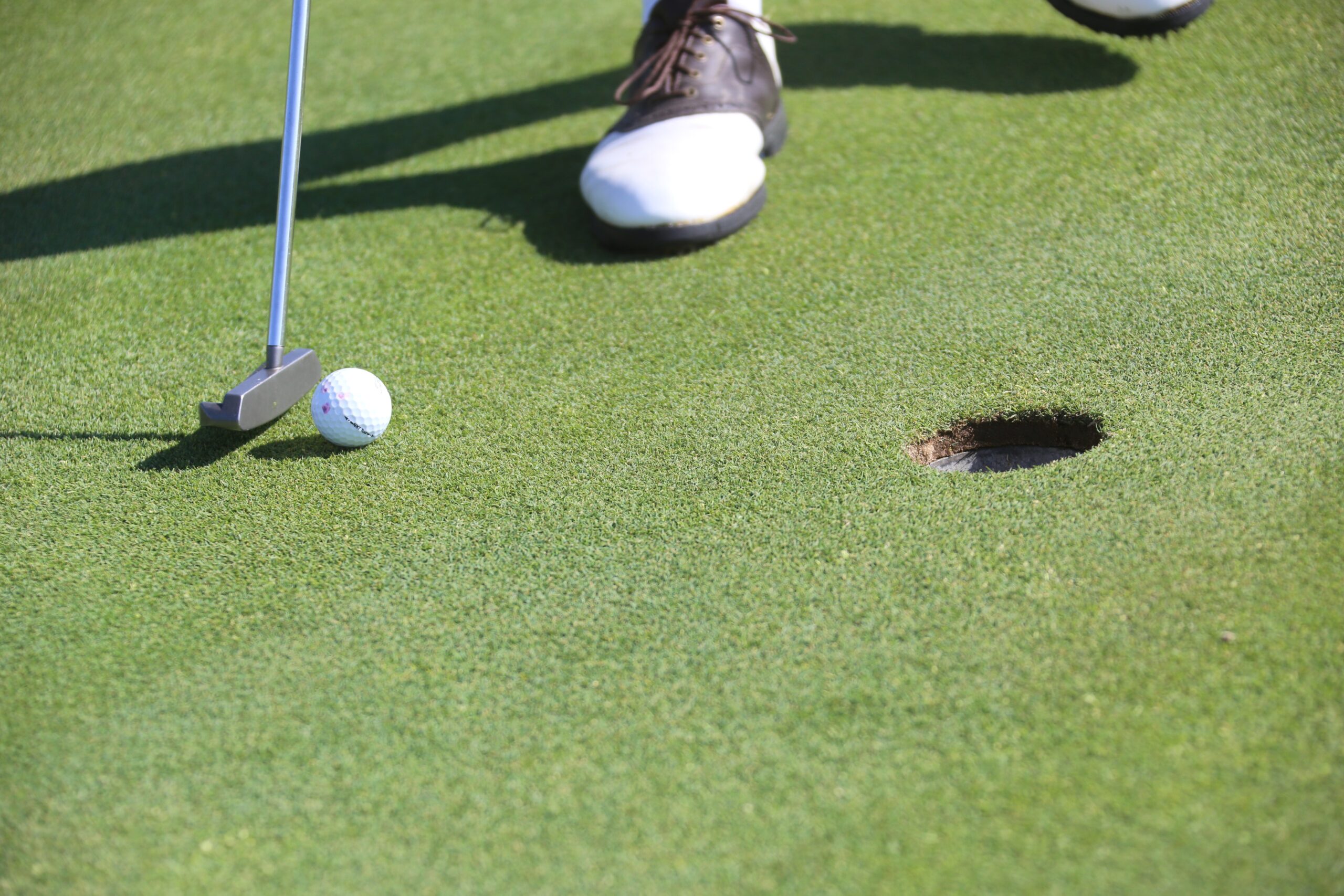
A birdie in golf is a score of one stroke under par on a single hole. For example, if a player completes a par-4 hole in three shots, they have made a birdie. This score reflects an achievement that improves a player’s overall round by finishing a hole better than the expected standard.

The term “birdie” comes from early American slang where “bird” meant something excellent or wonderful. Birdies are common among skilled golfers and are an important part of lowering scores and competing effectively. Understanding how to make birdies can help players focus on improving specific parts of their game.
Many beginners find golf scoring terms confusing, but knowing what a birdie represents is a key step in tracking progress and setting goals. It’s a straightforward measure that signals skill and precision during play, motivating golfers to aim for more under-par holes in their rounds. Learn more about the details of scoring and strategy for birdies here.
Understanding Birdie in Golf

A birdie represents a key measurement of skill within golf scoring terms. It involves achieving a score better than the expected performance on a hole, directly impacting overall results and competitive standing.
Definition and Meaning
A birdie in golf occurs when a player completes a hole in one stroke less than its designated par. Par is the standard number of strokes that a skilled golfer is expected to take to complete a hole. For example, if a hole is a par 4, finishing it in 3 strokes counts as a birdie.
The term “birdie” itself reflects the idea of an above-average or excellent performance and is commonly used during play to mark success. Unlike bogey or par, which denote average or slightly worse-than-average scores, a birdie signals a positive achievement, directly improving the player’s total score.
How Birdies Are Scored
Scoring a birdie requires one stroke fewer than par on any hole. Golfers track their score relative to par for the entire course, often combining various scores from par-3, par-4, and par-5 holes. Each hole’s par value defines the benchmark for what counts as a birdie.
For example, on a par-5 hole, finishing in four strokes is a birdie. Importantly, the birdie is not just the score itself but a recognition of beating the expected scoring standard. The ease of scoring a birdie varies depending on hole difficulty, player skill, and course conditions. Making a birdie putt-a successful stroke on the green to secure that one-under-par score-is often crucial.
Examples by Hole Type
Birdies can be scored on any hole, but how they are achieved can differ by hole type:
| Hole Type | Par Value | Birdie Score Example |
|---|---|---|
| Par-3 | 3 | Scoring 2 strokes |
| Par-4 | 4 | Scoring 3 strokes |
| Par-5 | 5 | Scoring 4 strokes |
On shorter par-3 holes, birdies typically come from precision shots and well-placed approach shots to reach the green quickly. Par-4 holes often require a combination of strong drives and accurate approach shots. On par-5 holes, birdies might result from long hitting combined with good putting, as players aim for fewer strokes over the lengthier distance.
Significance of Scoring a Birdie
Scoring a birdie lowers a player’s total score and positions them ahead of the standard par for the course. This can influence overall tournament rankings and is often the goal for players seeking to improve their game.
Birdies reflect successful execution and better control of the course, and accumulating birdies often separates highly skilled players from average amateurs. While not as rare as an eagle or albatross, birdies still require consistent precision.
In competitive golf, every birdie counts toward momentum, confidence, and strategy adjustments during a round, emphasizing its importance in golf scoring and terms. For more detail about birdie and golf scoring terms, see What Is a Birdie in Golf? Definition, Score & Examples.
Golf Scoring: Birdie and Other Key Terms
Golf scoring is based on a system centered around par, the expected number of strokes to complete a hole. Scores are measured relative to par, indicating whether a player is performing above or below that standard. Understanding key terms like birdie, eagle, and bogey helps clarify how golfers track and compare performance.
Par and Its Role
Par is the benchmark for scoring in golf, representing the number of strokes an expert golfer is expected to take on a hole. This number varies by hole, typically ranging from 3 to 5 strokes based on length and difficulty. A golf course’s total par, such as a common par 72, sums all hole pars together.
Par is essential because it sets the standard against which all scores are compared. Playing “even par” means completing a hole or round using exactly the expected number of strokes. Golfers strive to score under par, which indicates superior play.
Golf Scores Above and Below Par
Golf scores are described by their relation to par. A score under par means fewer strokes than expected, called “under par.” A one-stroke under par is a birdie. Two strokes below par is an eagle, and three strokes below, known as an albatross or double eagle, is extremely rare.
Scores over par indicate more strokes than expected and are named accordingly: one over par is a bogey, two over is a double bogey, three over a triple bogey, and so on up to quadruple and quintuple bogey for four and five strokes above par, respectively.
| Score Term | Strokes Relative to Par |
|---|---|
| Birdie | −1 |
| Eagle | −2 |
| Albatross/Double Eagle | −3 |
| Par | 0 |
| Bogey | +1 |
| Double Bogey | +2 |
| Triple Bogey | +3 |
Birdie Versus Eagle, Albatross, and Ace
A birdie means completing a hole one stroke under par. It is a sign of skilled play. An eagle occurs when a golfer finishes two strokes under par on a hole, which is less common than birdies. For example, scoring a 3 on a par 5 hole is an eagle.
An albatross, or double eagle, happens when a player scores three under par on a hole. This is extremely rare and often occurs by holing out in two shots on a par 5. A condor, four under par, is even more exceptional but virtually unheard of in competitive play.
An ace, commonly called a hole-in-one, means completing a hole with a single stroke, always one under par on par 2 and par 3 holes-an impressive feat that is celebrated in golf.
Impact on Handicap and Overall Scoring
Birdies, eagles, and other scores under par directly improve a player’s golf handicap, a numerical measure of a golfer’s potential scoring ability. Lower scores relative to par help reduce the handicap, allowing players to compete more fairly against others of differing skill levels.
Handicap calculations consider scores relative to course par, using adjusted strokes to balance differences between courses and playing conditions. Regularly achieving birdies or better shows consistent skill and reduces overall stroke count, contributing positively to a player’s performance metrics on any given course.
Frequently Asked Questions
A birdie occurs when a player finishes a hole with fewer strokes than the standard expected number, known as par. Understanding its value, relation to other scores, and the terminology around it helps clarify golf scoring.
How many strokes under par is a birdie?
A birdie is exactly one stroke under par. For example, on a par 4 hole, completing it in 3 strokes counts as a birdie.
Is making a birdie considered a good score in golf?
Yes, a birdie is a positive outcome. It means the player completed the hole more efficiently than the standard par, contributing to a lower overall score.
What is the difference between a birdie and a bogey?
A birdie is one stroke under par, while a bogey is one stroke over par. They represent opposite outcomes relative to the expected number of strokes.
How does a birdie compare to an eagle and an albatross?
A birdie is one stroke under par. An eagle is two strokes under par, and an albatross (or double eagle) is three strokes under par. Each successive term indicates a rarer and better score.
Why is it called a birdie in golf?
The term “birdie” originated in early 20th-century American slang where “bird” meant something excellent. The phrase was adopted to describe an excellent shot finishing a hole under par.
What does “double birdie” mean in golf scoring?
A “double birdie” is a non-standard term sometimes used informally to mean two strokes under par, but it is not officially recognized. Typically, that score would be called an eagle. For clarity, it’s best to use standard terms.